
The State of Homelessness in the Valley 2025
Over 9,700 people experience homelessness in Maricopa County every day. Learn the causes, signs, and how you can make a difference.
This material is published by A New Leaf, Inc. Its purpose is to summarize and provide a general overview of homelessness issues and possible responses. It is not intended as legal advice or as medical or behavioral health advice or treatment. It is not a substitute for individual professional consultation or for intervention or emergency response by law enforcement or legal process.
Resource Length: 20 mins | Published 2025
Download the full report now:
A Letter From the Expert
Dear Reader,
It is important to recognize how close each and every one of us is to homelessness at any moment. Something as simple as a lost job, a car crash, an illness or some other circumstance can quickly leave someone without a home. Most Arizonans live paycheck to paycheck, keeping up with rent and bills but never getting ahead.
In the last several years, housing costs have skyrocketed. More families than ever before have been pushed to the brink of homelessness. The threat of living without safety is a constant fear for many families across The Valley.
But there is good news. We can all take action to help those affected by homelessness. This guide is your starting point. It is our hope that this document will inspire you to have compassion for those experiencing homelessness, and perhaps, take action.
There is strength in asking for assistance, and you will be treated with the dignity you deserve. If you are currently experiencing homelessness, you are not alone. Please reach out for help today.
At A New Leaf we want to ensure every person recovering from homelessness receives full support as they rebuild their lives and get back on their feet. We offer affordable housing solutions, emergency rent and utility assistance and shelter for those in need.
Homelessness is a challenge that can be overcome but only if we decide as a community that it is worth solving. Asking for help and giving help to others are equally important. No matter where you are on your journey, please join us as we work to help those experiencing homelessness.
Thank you for reading,

Michelle Boyle
Director of Housing
A New Leaf
Introduction to Homelessness
If you want to help those experiencing homelessness in your community, there are two ways to effectively do this. You can help people who are currently homeless, or you can help prevent homelessness before it occurs.
We have a responsibility as a community to look out for one another when we fall on hard times. If a family or individual asks for help to overcome homelessness, our entire community is made stronger and healthier when we empower that family or individual to help themselves. With the proper support, resources and compassion, anyone can overcome the challenge of homelessness if they want to. There is always hope.
If you want to help prevent homelessness in the first place, this can be a little more challenging. Availability of affordable housing, quality of employment opportunities, educational access and so much more can influence who ends up homeless. However, there are a variety of tangible actions everyone can take to make housing more affordable, accessible and permanent. You have the power to enact real change in your local community by speaking up, taking action and advocating for change!
Before you start advocating, understanding the issue of homelessness is incredibly important. Knowing what homelessness is, how it affects your community, and who experiences it is crucial.
We must also recognize the importance of treating people who are homeless with the dignity and respect that they deserve. Although we may say that someone is a “homeless person,” it does not mean that they are defined by their homelessness. They are individuals with hopes, dreams and stories. The vast majority of individuals experiencing homelessness did not choose this path but were forced into it by circumstances beyond their control. They deserve the same level of respect and dignity as any other person.
The State of Homelessness in the Valley
The Valley is facing an immediate crisis of homelessness and spreading awareness and mobilizing our neighbors is crucial.

Summary of Homelessness in the Valley:
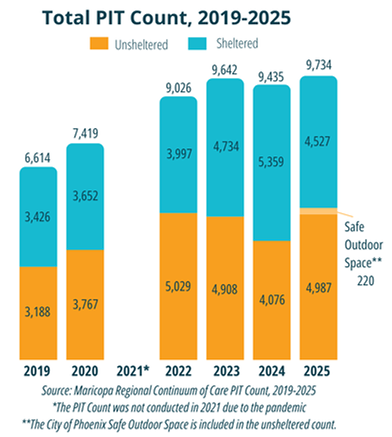
According to the 2025 Maricopa Association of Governments (MAG) Point-in-Time (PIT) Count, on any given day over 9,734 of our neighbors are living on the streets and struggling with homelessness in Maricopa County. Unfortunately, the community’s resources are limited and local shelters have a limited number of beds available, leaving many without shelter.
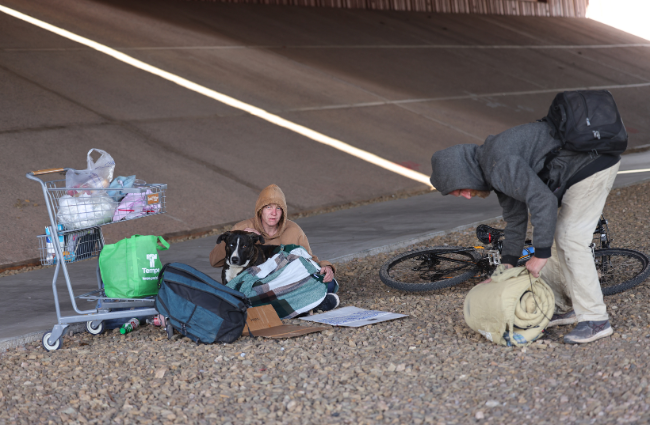
Experts believe the actual number of people experiencing homelessness is likely much higher than what is estimated due to weather, volunteer availability, and other factors that make it hard to get a complete, accurate count. While some are visible on street corners with signs, others are hidden from view, living in their car, in alleyways, or even in riverbeds and canals.
In 2025, more than half of the area’s homeless population was left unsheltered, a milestone that has only worsened in recent years. Maricopa County’s homelessness crisis has dramatically intensified, with a 28% jump in its unsheltered homeless population between 2024 and 2025, according to the most recent MAG PIT Count.
The number of people experiencing homelessness nationwide increased by more than 12% between 2023 and 2024, with several demographic groups (including Hispanic or Latino people, Native Americans or Pacific Islanders, single individuals, and people with disabilities who are chronically homeless) experiencing an even more dramatic increase in homelessness.
Who Experiences Homelessness in the Valley
The simplest and most powerful way to help is to be kind to those facing homelessness.
Demographically, men made up nearly two-thirds of the population experiencing homelessness. Adults aged 35 to 44 were the most represented age group, followed closely by those 25 to 34. Alarmingly, 12% of people counted were children under the age of 18, and another 7% were youth aged 18 to 24. Older adults (65+) made up 6%, highlighting how homelessness increasingly affects all ages.
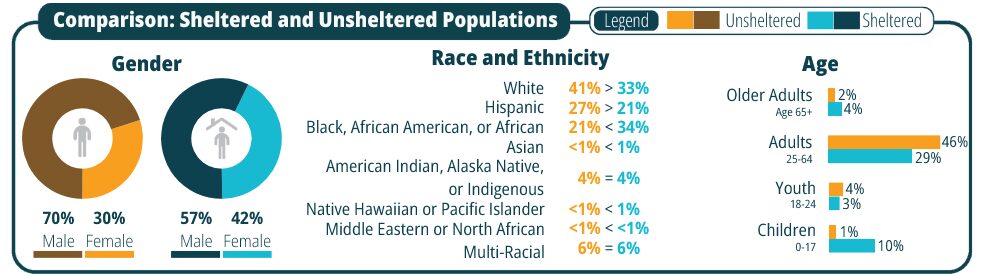
The PIT Count also revealed significant racial and ethnic disparities. Black or African American individuals made up 27% of those experiencing homelessness—far exceeding their representation in the general population. Hispanic or Latino people represented 24%, while Indigenous populations also appeared at disproportionate rates compared to the county’s demographic averages.
It is a common misconception that homelessness only affects a specific demographic group, but the reality is that anyone can find themselves without a roof over their head at any point in their lives. To truly understand the struggles that homeless individuals face, we must cultivate empathy and open-mindedness toward them. We must acknowledge that their displacement is often due to systemic issues such as racial disparities, mental health challenges, economic downturns and the lack of affordable housing.
Remember, anyone can experience homelessness in their lifetime, and we must approach each person based on their experience. Be open and kind with neighbors experiencing homelessness.
The Geography of Homelessness Across the Valley
The Valley is facing an immediate crisis of homelessness and spreading awareness and mobilizing our neighbors is crucial.
Regionally, the Central subregion saw the most dramatic increase in unsheltered homelessness, climbing to 3,761 individuals. While the East Valley and West Valley also saw increases, they were significantly smaller. Within municipalities, the City of Phoenix had the highest count and now includes 220 people staying at the Safe Outdoor Space, a structured outdoor shelter site.
Homelessness is not isolated to any one city or neighborhood, it is a regional crisis affecting every corner of the Valley. The 2025 Point-in-Time Count revealed individuals experiencing homelessness in nearly every municipality across Maricopa County, underscoring the reality that this issue is both widespread and growing.

To truly address homelessness in the Valley, resources must be available in the areas where people are experiencing homelessness, not only in centralized locations. While large shelters and service hubs in downtown Phoenix play a critical role, they cannot be the only solution. People living unsheltered in the West Valley, East Valley, or outlying communities often face barriers to transportation and may be disconnected from vital support if resources are concentrated in just one place. Localized services can reduce these barriers and provide help that is more accessible and immediate.
The design of resources should also reflect the unique needs of each community. For example, families experiencing homelessness in suburban areas may need different support than individuals living unsheltered in dense urban centers. Rural or edge communities may require mobile outreach or flexible shelter options that meet people where they are. By tailoring services to the geography and the populations most affected in each region, the Valley can build a system of care that is more responsive, equitable, and effective.
Causes of Homelessness in the Valley
Understanding the causes of homelessness begins by setting aside judgment and the tendency to assign blame. Homelessness has many causes that are complicated, confusing, and often stigmatized. Approach this section of the report with an open mind!
Homelessness is the result of many different factors coming together, and it cannot be traced to a single cause. It is shaped by both personal circumstances and broader community conditions, making it a complex issue that affects people in different ways. Understanding these causes is an important step toward creating lasting solutions.
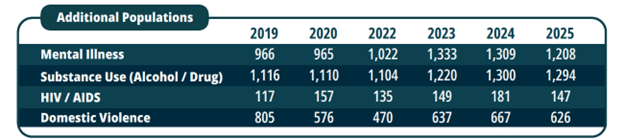
These are some causes/populations that are currently tracked in the Point In Time (PIT) Count:
- Domestic Violence: The leading cause of homelessness among women and children is domestic violence. According to the ACLU, we know that 50% of women and children experiencing homelessness are fleeing domestic violence. Homelessness can also drive survivors back to an abusive partner, perpetuating the cycle of abuse.
- Substance Use: One of the most common reasons for homelessness is drug or alcohol use. It is important not to pass judgement on this reality, but to understand why it plays such a large role in so many people’s housing journey. It is also important not to stereotype and assume everyone experiencing homelessness experiences substance use.
- Mental Illness: This includes clinical conditions that affect people for a lifetime, such as schizophrenia, bipolar disorder, etc. Without treatment, serious mental illness can disrupt people’s ability to manage basic daily activities, such as maintaining hygiene, keeping a job, or fulfilling basic responsibilities.
Homelessness is a complex issue, and there are many additional factors that can contribute beyond those already outlined. Each person’s experience is different, and the causes often overlap in ways that make every situation unique. Here are some other common causes:
- Lack of Affordable Housing: Across the United States, and in the Valley in particular, housing for families and individuals is becoming more and more expensive.
- Unemployment and Underemployment: Losing a job can leave households in desperate circumstances. Underemployment, when folks are unable to secure full-time employment, is also a challenge. Some people may work multiple part-time jobs to try to make ends meet, but this doesn’t give them benefits or paid time off.
- Foreclosure and Eviction: Evictions can occur due to various reasons, including unpaid rent, lease violations, or the expiration of a lease. Foreclosure is often a result of financial difficulties, such as job loss, reduced income, or significant medical expenses.
- Post-Traumatic Stress Disorder: PTSD affect many populations, but especially veterans.Adapting back to civilian life in the U.S. can be extremely difficult for the veterans. Mental health challenges can lead to lost jobs, divorce, and other personal challenges that increase the likelihood of homelessness. Unfortunately, some veterans may turn to drugs or alcohol to address the symptoms of their PTSD.
- Displaced Youth: It is not uncommon for teens to become homeless due to family conflicts related to addiction, abuse, sexual orientation, pregnancy, and aging out of foster care.
- Grief and Despair: Grief can be a significant risk factor in homelessness. A recent death in the family, a challenging divorce, or some other issue can make homelessness much more likely.
Recognizing Signs of Homelessness
Homelessness is a circumstance that can affect anyone. While it may be easy to spot someone who appears to be homeless in public, it can be more difficult to identify the signs of homelessness in friends, extended family and coworkers.
Not all homeless individuals live on the streets, and those experiencing, or at risk of, homelessness may try to conceal their situation to avoid burdening others. Homelessness can be a scary and isolating experience, causing feelings of shame, embarrassment and guilt.
It is especially true that people may be afraid of losing their employment, custody of their children, or even the respect of their family if their homelessness is exposed. These individuals may go to extreme measures to hid the circumstances they are facing.
Some people may not consider themselves homeless, despite not having a home. It is not uncommon for people to couchsurf, live in their car, or find shelter somewhere else while they try to find secure housing. While they may not consider themselves homeless, this is the situation they find themselves in.
- Erratic attendance and tardiness at school or work
- Exhibiting anger or embarrassment when asked about current address
- Constant “couch surfing” or staying with friends/family
- A sudden increase in poor self-esteem
- Sudden and extreme shyness
- A lack of reliable transportation
- Attendance at many different schools
- A tendency to carry more possessions with them (in car, backpack, etc.)
Access Services
Calling and speaking with a housing or shelter professional is the best way to determine a stable path forward, no matter your situation.
Hotlines:
Nearly all placements for shelter in Arizona are managed through 211 referrals. If you are seeking services please go through this phone number. Calling individual shelters will typically result in a referral to 211.
Services:
- Eviction Prevention: assistance with rent and utilities, helping to prevent homelessness before it occurs
- Emergency Shelter: up to 120 days in a temporary shelter
- Rapid ReHousing: assistance with move-in expenses and rent after experiencing homelessness
- Affordable Housing: apartments made to be affordable for lower-income households, meant as a permanent home
How You Can Help Your Neighbors Experiencing Homelessness
Use Your Voice and Vote to Create Change
Taking action at the local level and using your voice to encourage others to take action can be transformative. Vote for better policy and talk about homelessness with colleagues and family.
Volunteer Your Time
Organizations serving the homeless offer many opportunities to volunteer for the homeless population, for groups and individuals. Serve directly in a shelter, help in a donation center, or help by doing clerical work.
Participate in a Donation Drive
A donation drive is a coordinated effort to collect specific items, like clothing, food, or hygiene supplies, for people in need. By giving these goods, you give hope to someone in need.
Consider Making a Donation
One of the most effective and direct ways to support people experiencing homelessness is by making a financial donation to a local nonprofit or shelter.
Download the PDF of this report:
Related Resources

How To Help Homeless Neighbors
Learn practical ways how to help homeless neighbors through kindness, advocacy, community support, volunteering, and donations.