Past Client Dusti Speaks Out as Funding Cuts Threaten Domestic Violence Services in Arizona
This week, a tragic story in Phoenix once again exposed the deadly reality of domestic violence in our community. In the wake of multiple domestic violence homicides, survivors and advocates across the Valley are sounding the alarm about recent federal funding cuts that put lifesaving services at risk.
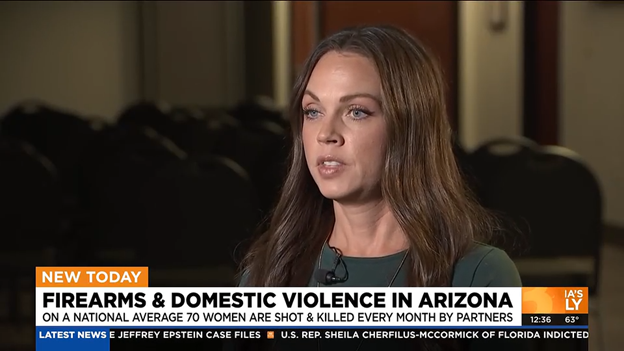
Among those raising her voice is Dusti Hyatt, a survivor who found safety, hope, and a path forward through A New Leaf’s domestic violence programs. Today, Dusti is an advocate for other survivors, using her story to push for greater protection and support for families in danger.
In an interview with Arizona’s Family, Dusti shared that when she sees violent cases on the news, she sees herself. “I see where I could have been,” she said. “Most women in those situations… they have to be able to go somewhere where they can feel safe because their healing can’t start until they feel safe.”
For Dusti, escaping years of verbal, physical, and emotional abuse was terrifying and it was only possible because a safe place existed when she and her children needed it most. She wants the community to know that without local intervention programs, many families simply would not survive.
Domestic violence organizations across Arizona, including A New Leaf, are now facing deep uncertainty as federal Victims of Crime Act (VOCA) funding continues to decline. These cuts threaten emergency shelters, crisis response, advocacy, children’s services, and the very programs that helped Dusti rebuild her life.
What this Means for A New Leaf’s Services
The recent funding cuts facing domestic violence programs nationwide have very real consequences here in Arizona. For A New Leaf, these reductions threaten the stability of essential services that thousands of survivors rely on each year. Programs that provide safe shelter, crisis response, legal advocacy, children’s support services, and transitional housing are all impacted.
While our teams continue to operate at full capacity, the margin for meeting rising community need is shrinking. More survivors are reaching out for help, yet fewer resources are available to meet them. This means:
- Longer wait times for emergency shelter beds as demand increases.
- Greater pressure on advocates and crisis teams responding to high-risk situations.
- Fewer resources for children, who often experience trauma alongside their parent.
- Higher reliance on community donations to keep programs open and staffed.
A New Leaf is committed to ensuring that no survivor is turned away due to lack of funding. But doing so requires the collective support of our community. Until federal funding stabilizes, these services remain vulnerable and the people who depend on them are placed at even greater risk.
Now more than ever, community support helps ensure safety for survivors. Every donation strengthens the safety net that protected survivors like Dusti and ensures that every person who reaches out for help finds a door that is open, welcoming, and safe.